



Steel vs. Aluminum Outdoor Furniture: Which Wins?
Steel and aluminum both get marketed as the durable choice for outdoor furniture, and that is exactly the problem. They are not solving the same problem. Steel wins on weight and wind stability. Aluminum wins on resisting rust straight out of the gate. For a homeowner picking a patio set, that trade-off comes down to taste. For a facilities manager specifying benches for a park, a restaurant patio, or a school courtyard, it is a purchasing decision with real consequences: replacement costs, vandalism exposure, and how the pieces hold up when nobody is watching them.
This guide breaks the decision down the way a public-space buyer actually needs it: weight and wind stability, corrosion resistance, durability under heavy use, maintenance over time, total cost of ownership, and how coating technology changes the math for steel. By the end, you will know which metal fits your project, not just which one sounds better in a catalog.
Table of Contents
- Steel vs. Aluminum Outdoor Furniture at a Glance
- Weight and Wind Stability: Which Metal Stays Put in Open Spaces
- Rust and Corrosion: How Each Metal Actually Holds Up Outdoors
- Durability Under Heavy Public and Commercial Use
- Maintenance Over the Furniture's Lifespan
- Upfront Cost vs. Total Cost of Ownership
- How Coatings Change the Equation for Steel
- Which Metal Fits Your Project? A Decision Framework by Use Case
- Frequently Asked Questions
Steel vs. Aluminum Outdoor Furniture at a Glance
Here is the short version. Steel is heavier, stronger under impact, and needs occasional coating maintenance. Aluminum is lighter, naturally rust resistant, and needs almost no maintenance beyond cleaning. The table below breaks down where each metal wins.
|
Attribute |
Steel |
Aluminum |
|---|---|---|
|
Weight |
Heavy, roughly 2.5 to 3 times denser than aluminum |
Light, easy to move or reposition |
|
Corrosion resistance (uncoated) |
Rusts once the surface is compromised |
Naturally rust resistant |
|
Durability under impact |
Resists denting and bending |
Softer, dents more easily under heavy impact |
|
Wind and tip resistance |
High, stays put in open spaces |
Lower, can shift without anchoring |
|
Typical maintenance |
Periodic coating touch-up |
Routine cleaning only |
|
Relative cost |
Comparable to aluminum, depending on gauge and coating |
Comparable to steel, depending on alloy and finish |
That density difference, steel running roughly 2.5 to 3 times denser than aluminum at equivalent volume, is the mechanical reason behind most of what follows. It explains why steel furniture stays put in the wind and why aluminum furniture is so easy to carry with one hand.
Weight and Wind Stability: Which Metal Stays Put in Open Spaces
A steel bench built to the same dimensions as an aluminum equivalent can easily weigh two to three times as much. For a backyard, that extra weight is mostly an inconvenience. For a public space, it is a feature. Furniture sitting in an open plaza, a waterfront park, or an unsupervised courtyard has to survive wind gusts and the general churn of public use without tipping, sliding, or walking away.
Most public-space specifications call for surface-mount or in-ground anchoring regardless of material, and you should anchor either metal if the site allows it. But steel's mass buys a real margin of safety in the sites where anchoring is not feasible, a temporary event setup, a seasonal patio, or a spot where drilling into the surface is not an option. The weight that homeowners see as a drawback is the exact property that makes steel the default for unsupervised public seating. Aluminum furniture in the same spot needs anchoring far more urgently, since a strong gust or a determined group of teenagers can move it without much effort.
Coastal and waterfront sites add another layer to this. Wind is more constant near open water, and salt air accelerates wear on any exposed hardware. A heavier steel frame with stainless hardware handles that combination better than a light aluminum frame that has to rely entirely on anchoring to stay put.
If wind exposure is a concern for your site, Wabash Valley's metal benches collection lists weight and anchoring specs by model so you can compare options directly.
Rust and Corrosion: How Each Metal Actually Holds Up Outdoors
Aluminum forms a natural oxide layer the moment it is exposed to air, and that layer self-protects the metal underneath. It does not rust the way steel does. This is aluminum's single biggest advantage over bare steel, and it is the reason so many residential buyers default to it without a second thought.
Here is where the comparison usually goes wrong, though. Almost no outdoor furniture manufacturer ships bare, uncoated steel. The comparison that actually matters to a buyer is aluminum versus coated steel, not aluminum versus raw steel fresh off the mill. Ask that question before you compare the two on rust resistance, because the answer changes the whole conversation.
What actually causes a coated steel piece to fail is not the coating wearing out on its own. It is a chip or a deep scratch that exposes bare metal underneath to moisture, usually from an impact, a dragged chair leg, or a keyed vandalism mark. Once that happens, rust can start at the exposed point and spread under the coating if it goes untreated.
The practical takeaway for a buyer is that coating quality and thickness matter more than the base metal once you are comparing commercial products. A thin, inconsistent coating fails faster and in more places than a thick, evenly applied one, regardless of which brand's furniture it is on. Ask a vendor how their coating is applied and how thick it runs before assuming steel automatically means a rust risk.
How aluminum resists rust naturally
The oxide layer forms almost instantly on exposed aluminum and reforms itself if scratched, which is why aluminum furniture rarely shows rust regardless of how it is treated.
Why uncoated steel is the wrong comparison for commercial furniture
Bare steel rusts quickly outdoors, but that is not the product you are actually buying. Every serious commercial steel line ships with a protective coating, so the real question is how that coating performs, not how raw steel would.
What actually causes coating failure on steel furniture
Chips and deep scratches are the failure point, not gradual wear. A well-applied plastisol or powder coating can go years without a touch-up if the surface stays intact.
For a deeper look at how different coatings hold up over time, see our guide to rust-resistant patio furniture.

Durability Under Heavy Public and Commercial Use
Steel resists denting and bending better than aluminum under heavy or careless use. Aluminum is a softer metal, and a hard impact, a dropped tool, a skateboard grind, a delivery cart bumping into a table leg, is more likely to leave a permanent mark or bend the frame out of shape.
Joint construction matters just as much as the metal itself. Fully welded steel frames hold up to repeated stress, people standing on benches, tables getting dragged across concrete, kids climbing on armrests, better than many aluminum joinery methods, which rely more heavily on fasteners and can loosen over years of use.
Vandalism and theft resistance rarely come up in a homeowner's decision, but they are a real specification concern for parks departments and school facilities teams. Heavier, welded steel construction is harder to disassemble, harder to carry off, and more resistant to the kind of abuse that unsupervised public furniture actually experiences.
This is also the point where most steel-versus-aluminum comparisons run out of road. They are written for someone furnishing a backyard, and they never touch what commercial-grade construction actually has to survive.
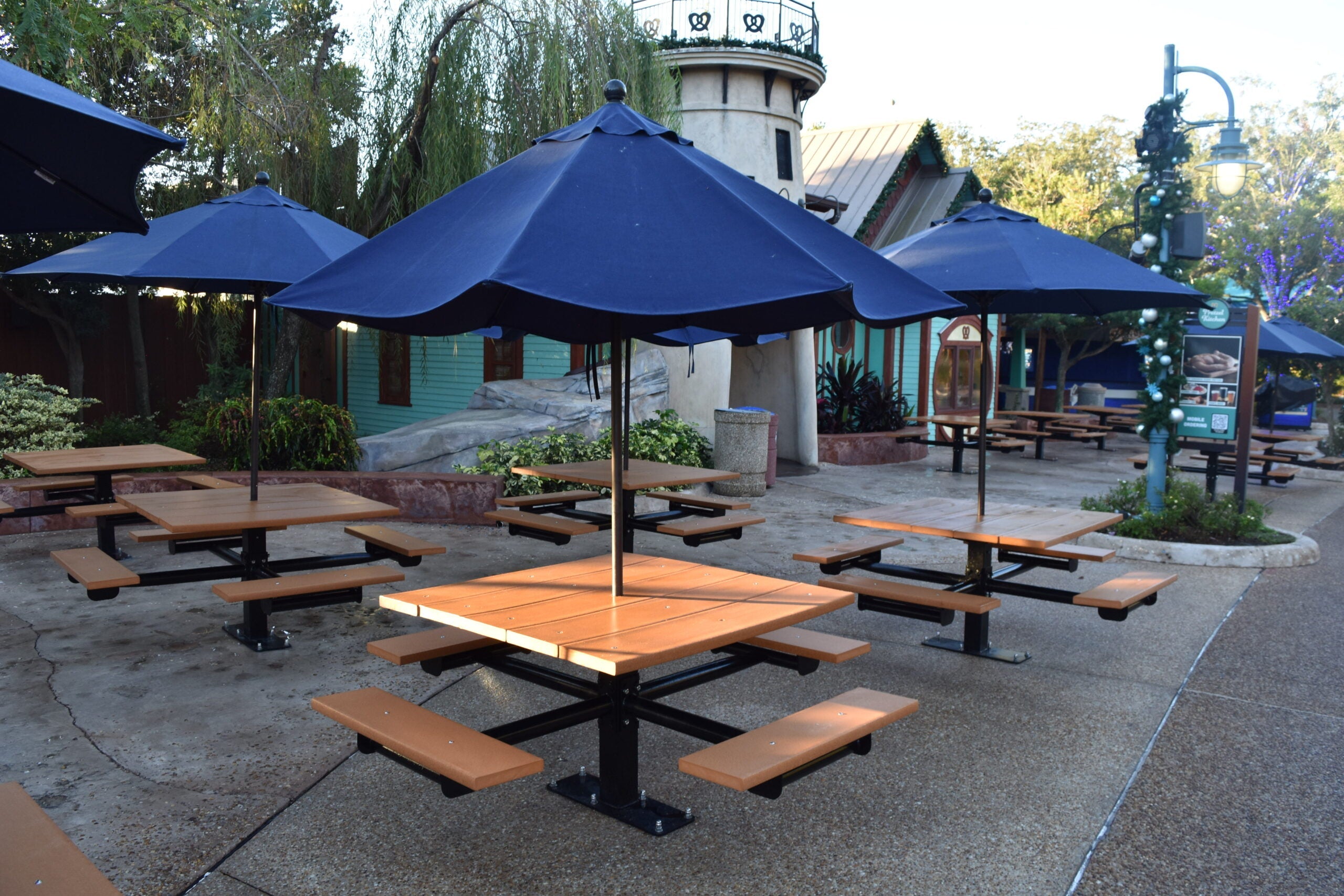
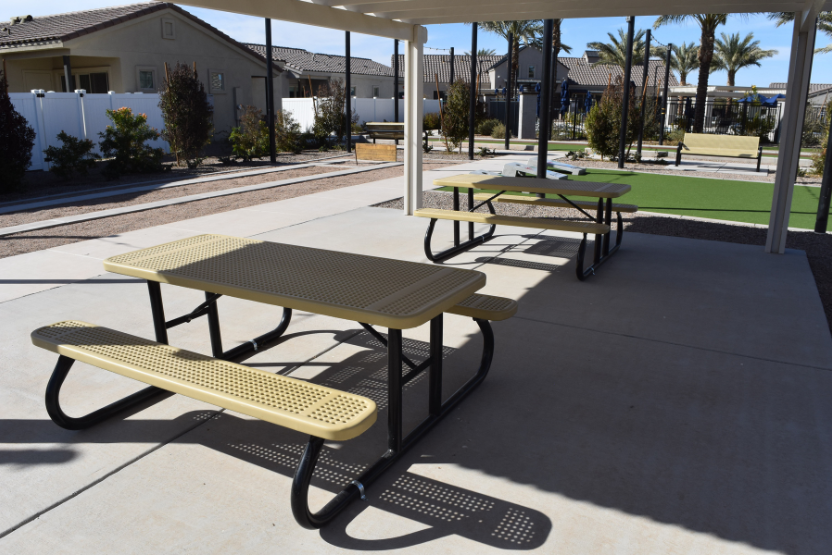
Consider a picnic table in a busy municipal park versus one on a private patio. The park table gets climbed on, dragged across concrete to catch shade, and used by hundreds of different people a week with no one checking on its condition. The patio table gets used by the same handful of people who treat it the way they treat their own furniture. Specifying for the first scenario means building in a margin the second scenario never needs.
See our breakdown of commercial-grade vs. residential-grade furniture for what separates the two at the construction level.
Maintenance Over the Furniture's Lifespan
Routine cleaning looks almost identical for both metals. Mild soap and water handles dirt, pollen, and grime on steel and aluminum alike, and neither needs anything more aggressive for everyday upkeep.
What changes is what happens over years. Aluminum needs essentially no rust-related maintenance for the life of the piece. Coated steel needs periodic inspection for chips and scratches, plus occasional touch-up paint at any damage points, especially in high-traffic areas where impacts are more common.
For a facilities team managing dozens or hundreds of units across a park system or campus, that translates into a manageable annual inspection pass rather than a constant maintenance burden. A quick visual check for exposed metal, a small tube of matching touch-up paint, and most coating damage never becomes a real problem.
Our commercial outdoor furniture maintenance guide covers a full inspection and cleaning schedule for multi-unit installations.
Upfront Cost vs. Total Cost of Ownership
Here is the honest answer on price: aluminum and steel overlap heavily depending on gauge, coating, and design, so sticker price alone is not a reliable way to compare them. A high-end aluminum piece can easily cost more than an entry-level steel one, and the reverse is just as common.
The comparison that actually matters for a public installation is total cost of ownership across a 10 to 15 year lifecycle, not the price on the initial quote. That means factoring in replacement frequency, the labor cost of touch-up work, and how often units get stolen or vandalized beyond repair.
Coated steel's slightly higher unit cost in some product lines is usually offset by lower replacement and reorder rates in high-traffic public settings, where furniture takes more abuse and lighter pieces are easier to steal or damage beyond repair. Ask about total cost over the warranty period, not price per unit, when you are comparing quotes across materials.
Warranty terms are worth reading closely here too. A longer warranty period does not always mean better coverage. Some warranties on both materials carve out surface rust or coating defects entirely, which is exactly the failure mode you are trying to insure against. Compare what each warranty actually covers, not just how many years it runs.

How Coatings Change the Equation for Steel
Plastisol and powder coating are protective layers bonded directly to the steel surface, and their job is straightforward: block moisture from ever reaching the metal underneath. That is the mechanism that closes most of the rust gap between coated steel and aluminum.
Once steel is properly coated, the corrosion-resistance argument for aluminum weakens substantially, while steel keeps its advantages in weight, wind stability, and impact resistance. A buyer comparing the two materials without accounting for coating quality is comparing the wrong things.
Not all coatings perform the same. Plastisol tends to run thicker and more flexible than standard powder coat, which gives it an edge in impact resistance and temperature insulation, two factors that matter more in public settings than they do in a backyard.
Temperature insulation is an underrated benefit here. A thicker coating keeps a steel bench cooler to the touch on a hot afternoon than bare or thinly coated metal, which matters for seating that sits in direct sun all day without anyone adjusting it.
For a full comparison of coating types, read our guide to polyethylene vs. plastisol coated outdoor furniture.
Which Metal Fits Your Project? A Decision Framework by Use Case
Rather than a generic answer, here is a direct recommendation by use case.
High-wind, coastal, or unanchored public sites
Choose steel. The added mass keeps furniture in place where anchoring is not an option, and a quality coating handles salt air and moisture exposure.
High-traffic parks, schools, and municipal grounds
Choose coated steel. Welded construction and impact resistance hold up better against the wear and occasional vandalism that unsupervised public furniture takes on.
Poolside lounging and easily rearranged seating
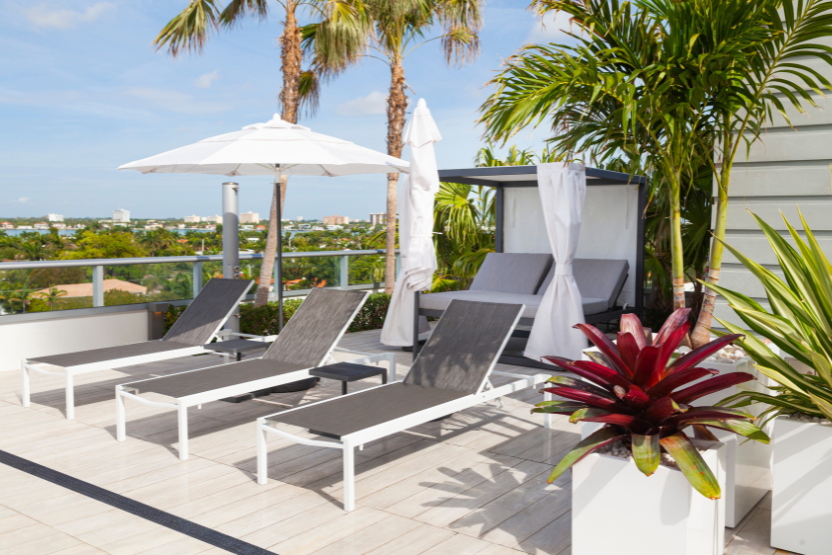
Choose aluminum. Lightweight frames make sense where furniture gets moved often and rust exposure from pool chemicals and splash is a bigger concern than impact.
Design-forward hospitality patios
Either metal can work here. Choose based on the aesthetic and how often the space gets rearranged, since both hold up fine under lighter, supervised hospitality use.
Whatever you land on, match the material to how the space actually gets used and who is (or is not) watching it, not to which metal photographs better in a catalog.
If you are weighing materials beyond just steel and aluminum, our guide to choosing the best material for outdoor furniture covers the full range, including recycled plastic and wood.
Frequently Asked Questions
Is aluminum good for outdoor furniture?
Yes. Aluminum resists rust naturally, weighs little, and holds up well in wet or coastal climates. It is a strong choice for lightweight, easily moved furniture, though it is less ideal for unanchored public spaces prone to wind or heavy impact.
Does aluminum outdoor furniture rust?
Not in the way steel does. Aluminum forms a natural oxide layer that protects it from corrosion, so it will not develop the reddish rust associated with untreated steel, even after years outdoors.
Does aluminum outdoor furniture get hot in the sun?
It can, since metal conducts heat more than wood or plastic. Powder-coated finishes and lighter colors reduce surface temperature, and cushions solve the problem entirely for seating.
How long does aluminum outdoor furniture last?
A well-made aluminum piece can last 15 to 20 years or longer with basic cleaning, since it does not face the coating-maintenance schedule that steel does. Frame quality and joint construction affect this more than the metal itself.


