



Best Outdoor Furniture for Arizona's Hot & Dry Climate
Arizona doesn't just get hot, it tests every material a manufacturer claims is "weather-resistant." Triple-digit summers, intense UV, and humidity that rarely climbs out of the single digits combine to strip color, crack plastic, and heat metal past the point of comfort. Search this topic online and you'll find no shortage of homeowners comparing notes on furniture that didn't survive its first Arizona summer.
This guide covers what actually holds up: which materials handle the heat and dry air well, why frame construction matters as much as the material itself, and how coating quality determines whether a finish lasts five years or fifteen. The same principles apply whether you're furnishing a backyard patio or specifying benches and tables for a park, campus, or commercial space, so the second half of this guide shifts from buying advice to specification guidance for exactly that audience.
In This Guide
-
What to Look for in Arizona-Ready Outdoor Furniture Materials
-
Maintenance Tips to Extend the Life of Outdoor Furniture in Dry Climates
Why Arizona's Climate Destroys Ordinary Outdoor Furniture
Heat is only part of the problem. Arizona's near-zero humidity means there's no moisture in the air to buffer temperature swings or slow UV degradation, so plastics dry out and crack faster than they would in a humid climate, and pigments fade sooner because nothing softens the sun's intensity.
Surface temperature makes the stakes concrete. On a June afternoon in Phoenix, a local news crew measured a park's metal railing at 131°F and the pavement beneath it at 138°F, with the air temperature sitting around 116°F. National Weather Service data for Phoenix confirms summers regularly running several degrees above the 1991 to 2020 normal, with highs well past 110°F for weeks at a stretch.

That's the baseline any Arizona outdoor furniture purchase has to survive, not just look good in a showroom photo.
What to Look for in Arizona-Ready Outdoor Furniture Materials
Material choice is where most buying guides start, and for good reason. Three materials consistently perform well in Arizona's heat, and one specific failure pattern shows up across nearly everything else.
Powder-Coated Aluminum
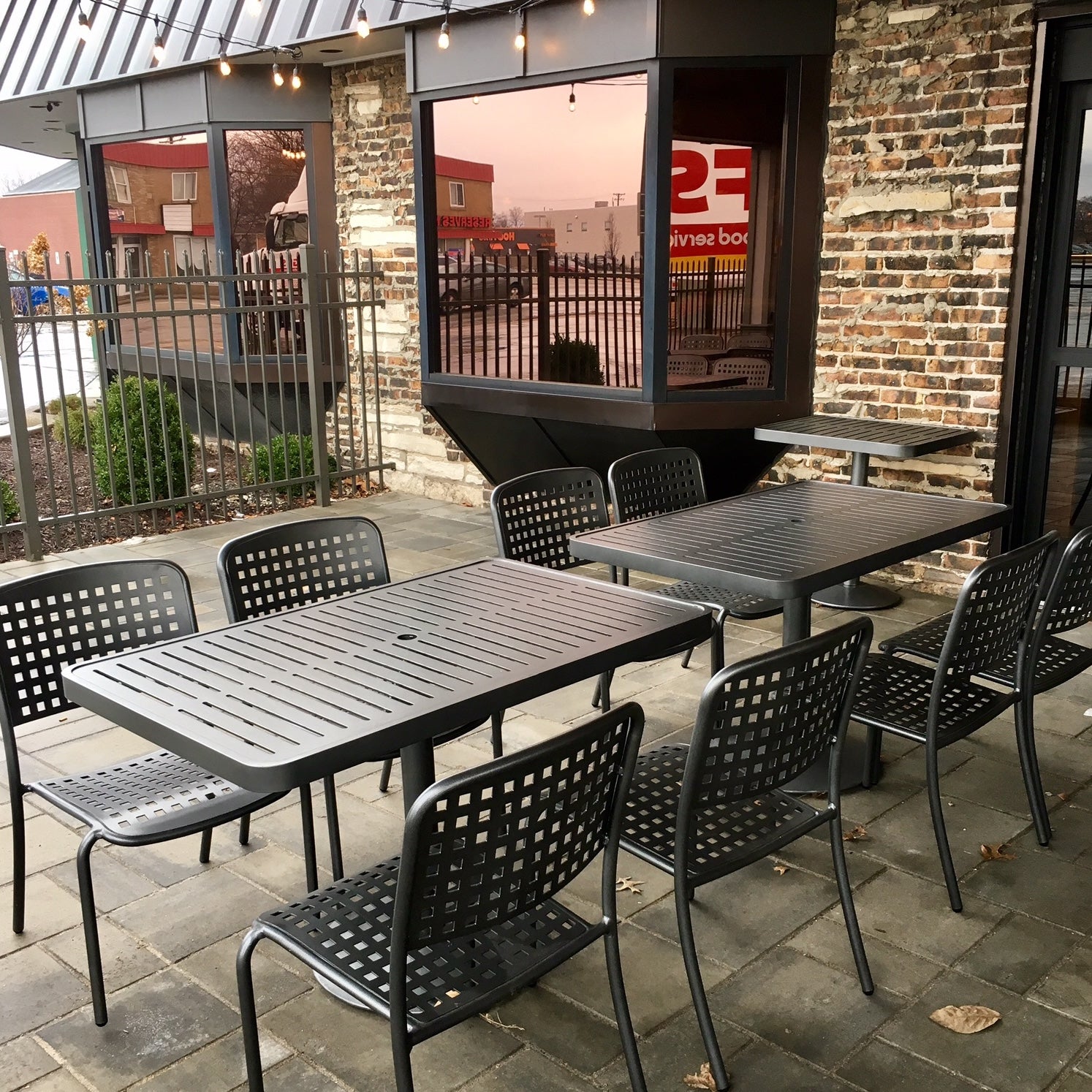
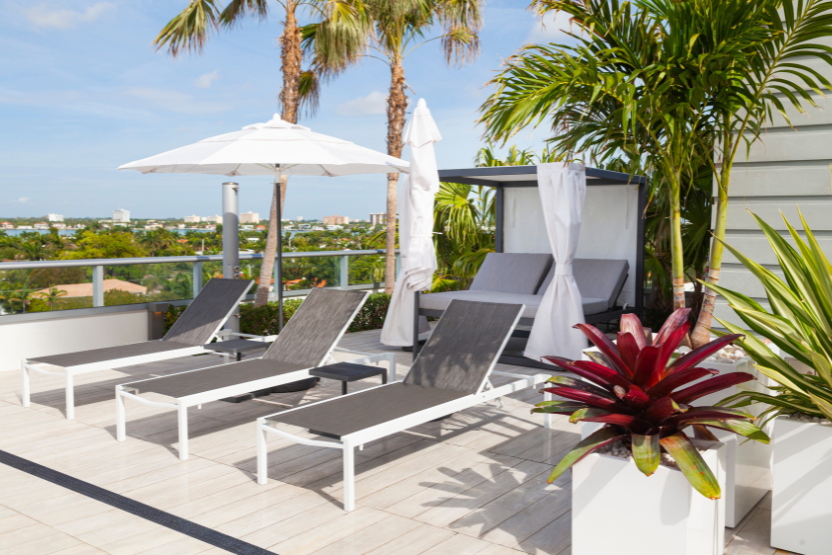
Aluminum is naturally rust-resistant and light enough to move around a patio without much effort. The coating is what determines how long it holds color under constant sun, so a well-applied, high-quality powder coat outperforms a thin, cheap one by years, not months.
HDPE (Recycled Plastic)
High-density polyethylene resists cracking, peeling, and rot in a way natural wood can't. It does get hot to the touch in direct sun, the same as any dark, solid surface, which is one more reason color matters as much as material.
Teak
This naturally oily hardwood resists drying and splitting better than most untreated woods. It still benefits from occasional oiling in a climate this dry, since even teak's natural oils get pulled out faster under constant heat than they would elsewhere.
What to Avoid
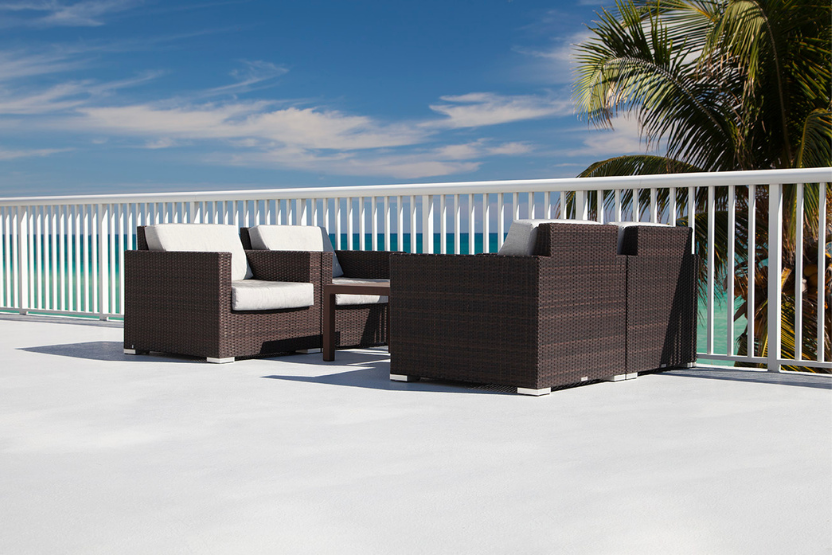
Uncoated iron becomes too hot to touch by midday and rusts the moment its finish chips. Cheap resin wicker looks fine in a showroom and turns brittle within a year of direct Arizona sun. Lighter frame and cushion colors help across every material on this list, since they reflect heat instead of absorbing it, keeping furniture cooler to the touch regardless of what it's made from.
For a deeper breakdown of how these materials compare across climates, not just Arizona's, see choosing the best material for outdoor furniture.
Why Frame Construction Matters More Than Material Alone
Material only tells half the story. A frame's construction, specifically whether it's bolted or fully welded, often determines how long that material performs.
Bolted joints work loose over time, and in a climate this dry, they work loose faster. There's no ambient moisture to slow corrosion at the joint the way there might be somewhere humid, but there's also no lubrication left in a fastener once the heat bakes out whatever coating or grease protected it originally. The joint becomes the weak point long before the material around it fails.
Fully welded steel frames don't have that failure mode. There's no joint to loosen, no fastener to corrode, no gap for a coating to wear through faster than the surface around it. The frame moves as one piece through every heat cycle instead of working itself apart joint by joint.
A great material on a poorly welded frame still fails first at the joints, not the surface everyone worried about. That's the detail separating furniture built to survive a few Arizona summers from furniture built to survive a couple of decades of them.

The Case for Plastisol-Coated Steel in Extreme Heat
Once the frame question is settled, the coating question follows naturally. Plastisol is a thicker, more flexible vinyl-based coating applied over steel, rather than the thin, baked-on polyester layer standard powder coating uses. That extra thickness and flexibility matter in a climate that puts coatings through a wider daily temperature swing than almost anywhere else in the country.
The coating industry has its own benchmark for this. AAMA 2604, the voluntary specification most high-performance coatings are measured against, requires no more than 5 Hunter units of color loss and at least 30% gloss retention after five years of direct Florida sun exposure, along with 3,000 hours of salt spray corrosion testing. It's an independent industry standard, not a claim one manufacturer invented on its own.
None of this matters much for furniture that spends most of the year under a patio cover. It matters a great deal for furniture, or for public benches and tables, sitting in direct sun for a decade or more without a break. The longer the exposure, the more a properly applied plastisol coating separates itself from a standard powder coat, first in color and gloss, later in whether the steel underneath corrodes at all.
If you want the fuller comparison, plastisol coating vs. powder coating breaks down how the two hold up side by side.
Choosing Fabric and Finish Colors That Survive Full Sun
Color deserves its own section, brief as it is, because it decides how hot a piece feels to sit on long before material or coating quality ever gets tested. Lighter tones, sand, beige, light gray, reflect heat instead of absorbing it, and they hold their look longer under constant UV than darker tones do.
Fabric matters just as much as color choice. Solution-dyed fabrics have their color woven through the fiber itself rather than applied as a surface treatment, so they fade far more slowly than pigment-dyed alternatives under the kind of sun exposure Arizona delivers most of the year.
Neither choice fixes a poor material or a weak frame underneath it, but paired with the right ones, it's the difference between furniture that still looks new after three summers and furniture that looks tired after one.
Furnishing Public and Commercial Spaces in Arizona's Heat
Everything above applies just as directly to a park bench as it does to a backyard chair, just at a different scale and with less room for error.
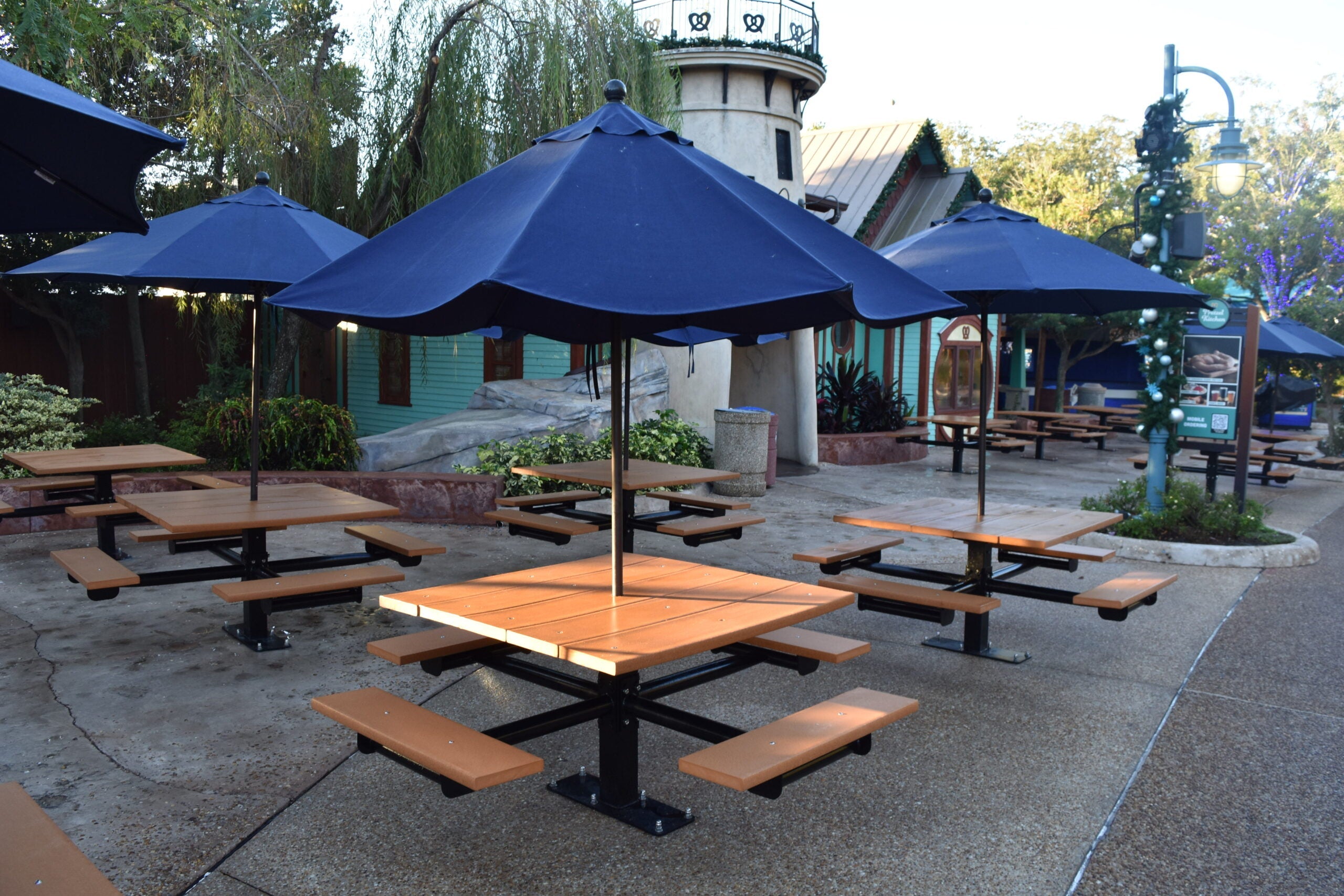
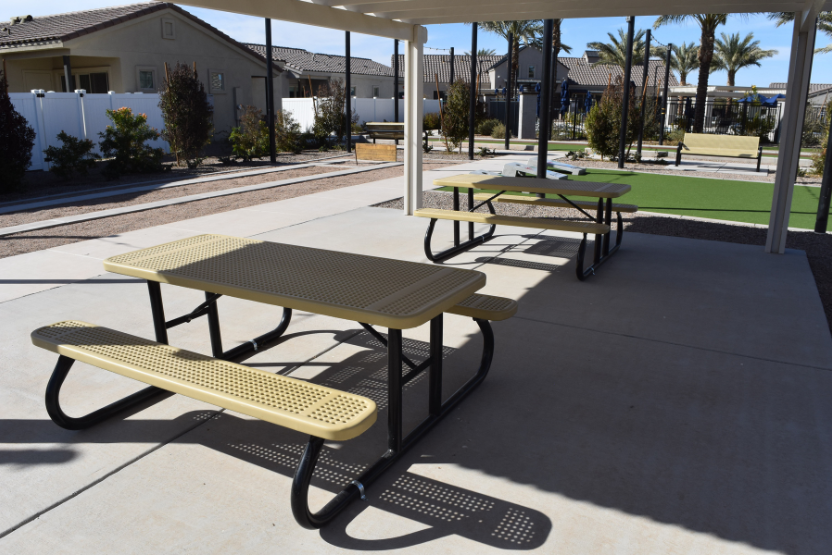
Parks departments, campuses, HOAs, and municipalities specifying benches, tables, and site furnishings face the same heat and UV exposure homeowners do, plus a few demands a residential purchase never has to meet. Public furniture takes more impact and more attempted vandalism than anything in a private backyard. It typically has to clear ADA spacing and clearance requirements. And it sits outside, uncovered and unmaintained by any single owner, for as many years as the budget cycle allows before anyone revisits the purchase.
Warranty terms matter more in this context than they do for a homeowner buying a patio set. A strong warranty backed by a genuinely low claim rate is closer to a real quality signal than anything printed on a spec sheet, since it reflects how the product performs across thousands of installations in exactly this kind of climate, not just in a lab.
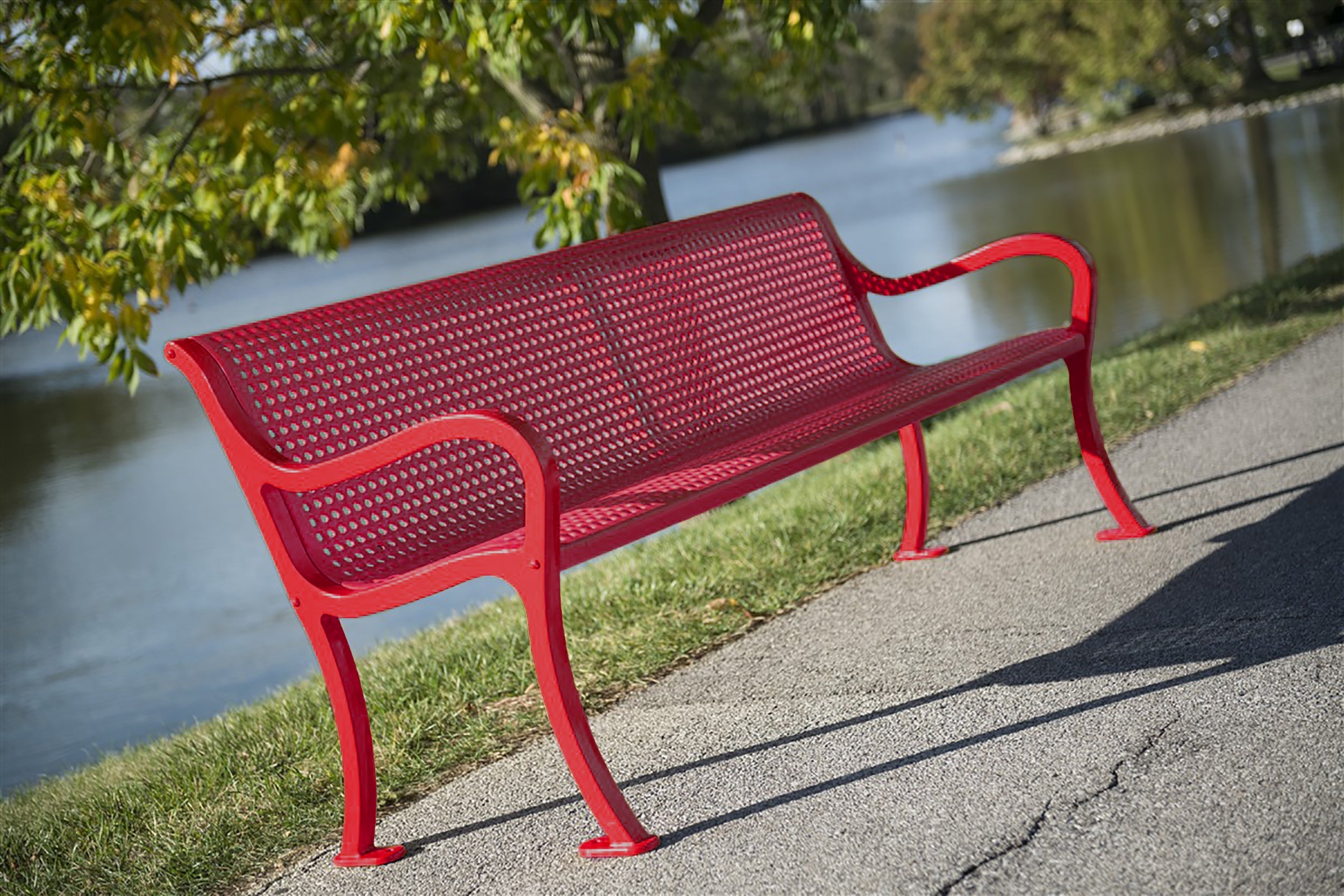
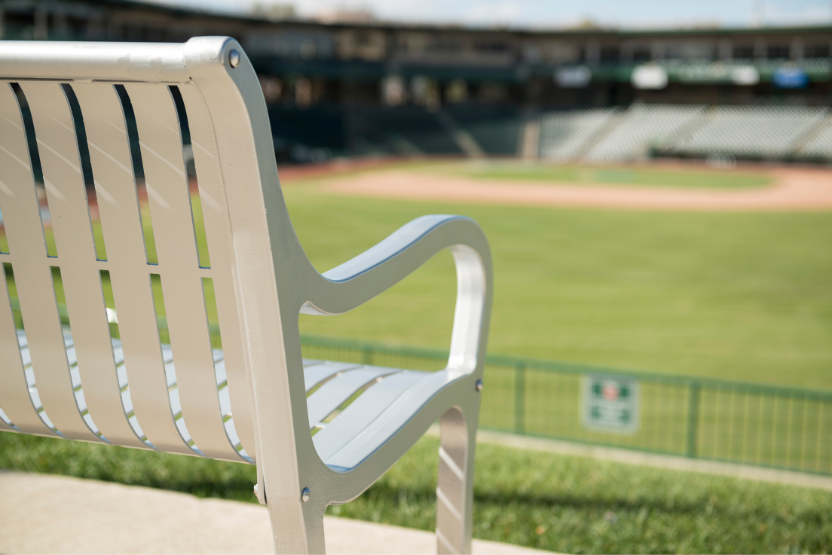
A public installation gets one chance to be specified right. A failure here means a new procurement cycle, not a return label. That's the case for treating material, frame, and coating decisions with even more rigor at this scale, not less. Our commercial outdoor benches are built around the same fully welded steel and coating standards covered above, just tested against a duty cycle most residential furniture never has to survive.
Maintenance Tips to Extend the Life of Outdoor Furniture in Dry Climates
Even the right material and the right coating benefit from a little upkeep in a climate this demanding.
-
Rinse dust and grit regularly. Arizona's dry conditions kick up fine particulate that can scratch finishes over time, especially on darker or glossier surfaces.
-
Inspect hardware and welds each season. Look for brittleness at joints or any sign a coating has started to lift, since small issues here are far cheaper to fix than a full replacement.
-
Skip harsh solvents on coated surfaces. Mild soap and water clean just as effectively without breaking down the coating faster than the sun already does.
-
Reposition or shade cushioned furniture during peak summer months where you can. Even a few hours of shade in the early afternoon meaningfully extends fabric life.
None of this replaces buying the right material in the first place, but a few minutes of seasonal maintenance is the cheapest insurance available for furniture that's already built to last.
Frequently Asked Questions
What is the best outdoor furniture for Arizona?
Powder-coated aluminum, HDPE, and teak all perform well, but frame construction and coating quality matter as much as the base material. Fully welded steel with a high-performance coating like plastisol tends to outlast lighter-duty options by years, not months.
Does furniture color really affect how it holds up in Arizona heat?
Yes. Lighter colors reflect heat rather than absorbing it, so they stay cooler to sit on and resist visible fading longer than dark tones under the same sun exposure.
What's the difference between plastisol and standard powder coating?
Plastisol is a thicker, more flexible vinyl-based coating that generally holds up longer under constant heat and UV than a standard, thinner powder coat, particularly on furniture that stays outside uncovered year-round.


