



Patio Umbrella Size Guide
The right patio umbrella size depends on your table dimensions and how much shade coverage you need.
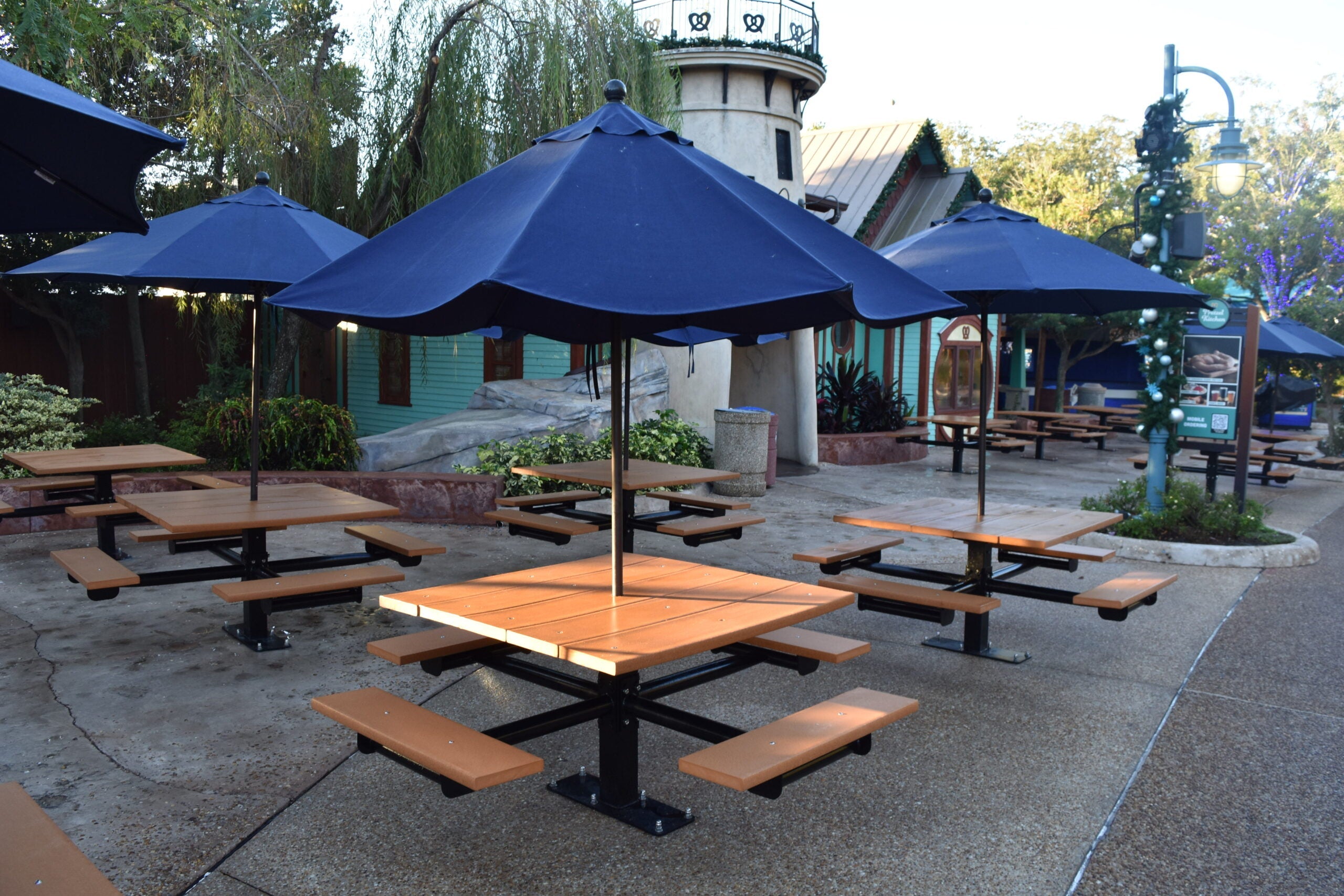
As a general rule, your umbrella should extend at least 2 feet past your table or seating area on all sides. For most standard 4 to 6-person tables, a 9-foot umbrella provides ideal coverage.
This guide breaks down exactly how to measure, calculate, and select the best umbrella size for your commercial outdoor space.
What Size Umbrella Do You Need for Your Table?
The size of your table determines the minimum umbrella diameter you should consider. A quick measurement of your table's width or diameter gives you a solid starting point.
For a 4-person table (36 to 42 inches wide), a 7 to 9-foot umbrella provides adequate coverage. This size creates a comfortable shade zone that protects diners without overwhelming a smaller space. Most standard outdoor furniture setups fall into this category.
For 6-person tables (48 to 60 inches wide), step up to a 9 to 11-foot umbrella. Eight-person tables (72 inches or longer) need at least an 11-foot umbrella, though 13-foot options work better for complete coverage.
Here's a quick reference:
| Table Diameter / Width | Seating Capacity | Recommended Umbrella Size | Coverage Notes |
|---|---|---|---|
| 36 inches | 2–4 people | 7–9 ft umbrella | Provides basic shade coverage with ~2 ft overhang |
| 42 inches | 4 people | 9 ft umbrella | Ideal for most small dining tables |
| 48 inches | 4–6 people | 9–11 ft umbrella | Extra canopy helps cover seated guests |
| 60 inches | 6 people | 11 ft umbrella | Provides full shade during peak sun hours |
| 72 inches | 6–8 people | 11–13 ft umbrella | Best for large tables or commercial seating |
How Do You Calculate Shade Coverage Area?
Understanding how shade works helps you pick the most practical size for your space. The sun moves throughout the day, so your shade pattern shifts constantly.
At noon, a center-pole umbrella casts shade directly beneath it in a circular pattern matching its diameter. A 9-foot umbrella creates roughly 63 square feet of shade coverage at midday. By mid-afternoon, that same umbrella casts an elongated shadow that may miss part of your seating area.

For restaurant outdoor seating, this matters when planning table placement. Position patio tables so the umbrella provides maximum shade during your busiest service hours. Most establishments prioritize lunch coverage, making midday shade calculations the most relevant.
To calculate your needs, measure your seating area and add 4 feet to account for the 2-foot overhang on each side. A seating area that spans 5 feet needs at least a 9-foot umbrella for proper protection.
What's the Difference Between Center Pole and Cantilever Umbrellas?

Your umbrella style affects both sizing considerations and placement flexibility. Each type has advantages for specific commercial applications.
Center pole umbrellas mount directly through your table or into a freestanding base. They work well for:
-
Individual table coverage
-
Spaces with limited overhead clearance
-
Budget-conscious projects
-
Traditional patio aesthetics
Cantilever (offset) umbrellas suspend the canopy from an angled arm, leaving the area beneath completely open. These typically range from 9 to 13 feet and offer superior flexibility for patio furniture arrangements.
Cantilever models excel in commercial settings where you need to shade multiple tables or create lounge zones without center pole obstructions. They also allow full rotation and tilt adjustment to track the sun throughout the day.
The trade-off is that cantilever umbrellas require more substantial bases and higher initial investment. They also need more overhead clearance and wind consideration due to their extended reach.
What Factors Affect Commercial Umbrella Size Selection?
Beyond table dimensions, several practical factors influence your ideal umbrella size for commercial applications.
Wind exposure ranks as the most critical consideration for businesses. Larger umbrellas catch more wind, creating stress on bases, poles, and mounting hardware. Locations with consistent breezes may benefit from multiple smaller umbrellas rather than one large canopy.
Ceiling height matters for covered patios or rooftop installations. You need at least 7 feet of clearance beneath the umbrella canopy for comfortable movement. Add the umbrella height (typically 7 to 8 feet for standard models) to determine your total overhead requirement.
Local codes sometimes specify umbrella placement relative to property lines, walkways, or fire lanes. Check regulations before ordering oversized commercial umbrellas that might require permits or setback adjustments.
Your budget also plays a role. Umbrella costs increase significantly with size, especially for commercial-grade options with aluminum frames and fade-resistant fabrics. A 13-foot umbrella typically costs 40 to 60 percent more than a comparable 9-foot model.
Find the Right Commercial Umbrella at Wabash Valley
Selecting the right umbrella size protects your guests and extends the usability of your outdoor space. Start by measuring your tables, calculate your shade coverage needs, and factor in wind exposure and clearance requirements.
Wabash Valley offers a complete selection of commercial patio umbrellas designed for parks, restaurants, hotels, and other high-traffic environments. Our team can help you determine the right sizes and quantities for your specific project. Contact us for personalized recommendations or browse our online collection today.


